
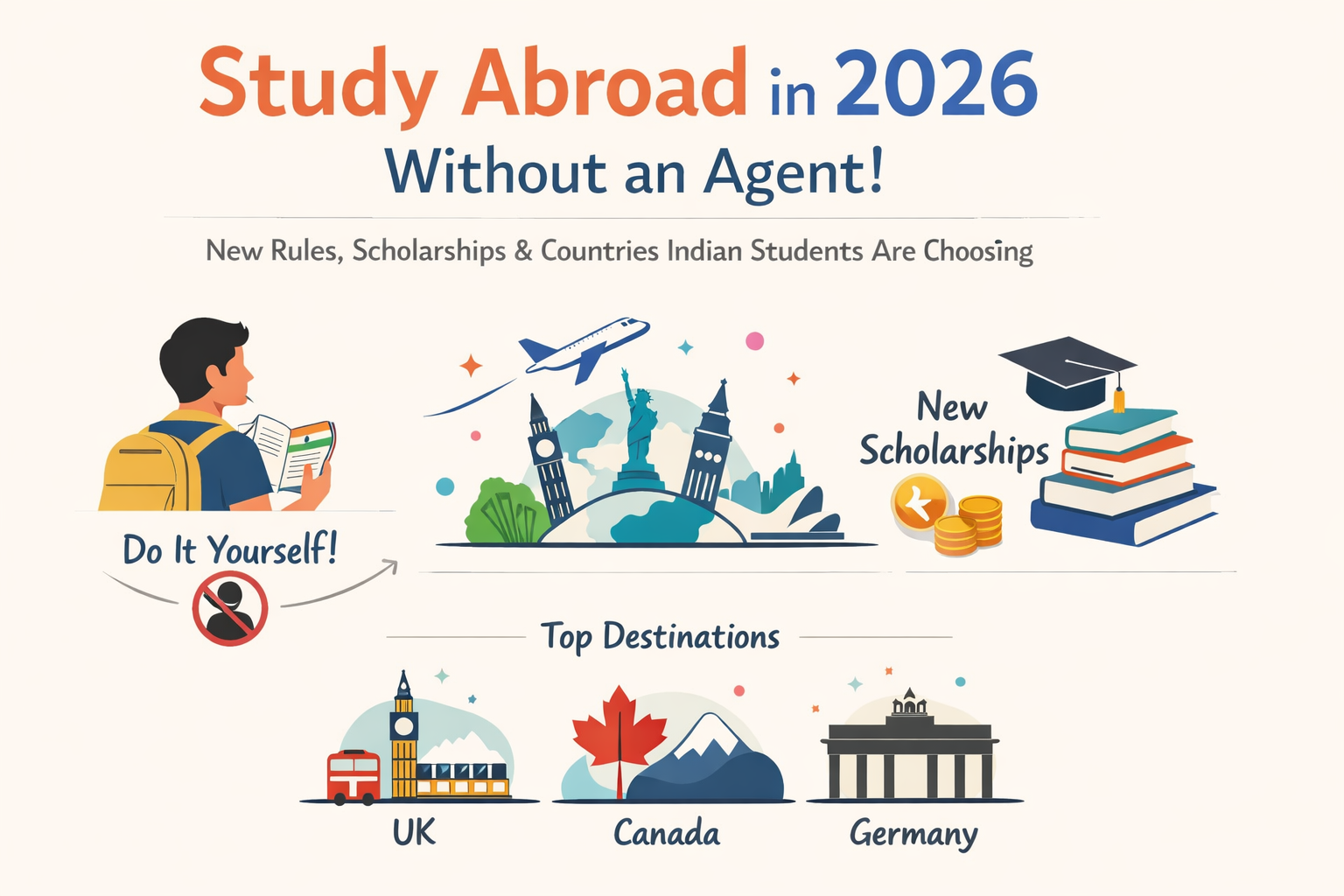
Dreaming of studying in the United States but worried about the cost? You’re not alone. American universities can be expensive, but international students have access to a wide range of scholarships, fellowships, grants, and university-based financial aid that can significantly reduce—and in some cases nearly eliminate—the cost of studying in the USA.
From prestigious programs such as the Fulbright Foreign Student Program to generous financial-aid packages offered by leading universities, there are real opportunities for qualified international students.
The key is knowing where to look, understanding the requirements, preparing strong applications, and starting early.
This guide walks you through some of the most important scholarship opportunities, application strategies, visa requirements, work options, and financial considerations for international students planning to study in the United States.
Why Study in the USA?
The United States remains one of the world’s most popular destinations for international education for good reason.
American universities offer access to advanced research facilities, globally recognized qualifications, diverse academic programs, and extensive professional networks. Students can also benefit from practical training opportunities that may allow them to gain work experience related to their studies.
However, the cost can be a major concern.
Tuition, accommodation, health insurance, books, transportation, and everyday living expenses can quickly add up. This is why finding financial assistance should be part of your study-abroad strategy from the beginning.
The good news is that scholarships are available at different levels and through different organizations.
Major Scholarships International Students Should Know About
Fulbright Foreign Student Program
The Fulbright Foreign Student Program is one of the best-known U.S. government-funded opportunities for international students.
The program supports graduate-level study and research for students from eligible countries. Depending on the country and program, awards can provide support toward tuition, living expenses, airfare, health insurance, and other educational costs.
Competition is intense, so applicants should demonstrate strong academic ability, leadership potential, community involvement, and clear future goals.
Applicants generally apply through the Fulbright Commission, U.S. Embassy, or designated organization in their home country.
Official information is available through the Fulbright Foreign Student Program.
Hubert H. Humphrey Fellowship Program
The Hubert H. Humphrey Fellowship Program is designed for experienced professionals from eligible countries who want to strengthen their professional skills through graduate-level, non-degree study and professional development in the United States.
The program typically targets mid-career professionals with leadership potential and a record of public or community service.
For professionals who want to expand their expertise and international network, it can be an excellent opportunity.
Learn more through the Humphrey Fellowship Program.
University-Based Financial Aid
Government scholarships aren’t your only option.
Many American universities provide substantial financial assistance to international students, particularly at the undergraduate level. Some institutions evaluate students based on financial need and may cover a significant portion of demonstrated financial need for admitted students.
Harvard University
Harvard provides need-based financial aid and states that it meets 100% of demonstrated financial need for admitted students.
Its financial-aid system can make Harvard considerably more affordable for students from lower- and middle-income families who are admitted.
More information is available through Harvard Financial Aid.
Yale University
Yale also provides need-based financial aid to admitted undergraduate students and states that it meets 100% of demonstrated financial need.
International applicants can apply for financial aid, although admission and aid policies for international students should always be reviewed carefully before applying.
Visit Yale Financial Aid for current information.
Stanford University
Stanford offers need-based financial aid and has a number of funding opportunities for students.
Graduate students can also explore programs such as the Knight-Hennessy Scholars Program, which provides substantial financial support to selected graduate students.
Visit Stanford Financial Aid and Knight-Hennessy Scholars for current requirements.
University of Pennsylvania
The University of Pennsylvania offers need-based financial aid to eligible international students and can meet demonstrated financial need for admitted students under its policies.
Because international financial-aid policies vary by university and applicant category, always verify the current requirements before submitting an application.
Scholarships for Specific Groups and Fields
Some opportunities are designed for particular academic disciplines, professional backgrounds, or personal circumstances.
AAUW International Fellowships
The AAUW International Fellowships support women who are pursuing graduate or postgraduate study in the United States and who meet the program’s eligibility requirements.
Awards vary by study level and program.
Visit the AAUW International Fellowships website for current award amounts and eligibility rules.
Paul & Daisy Soros Fellowships for New Americans
The Paul & Daisy Soros Fellowships for New Americans are designed for immigrants and children of immigrants who are pursuing graduate education in the United States.
Eligible applicants must meet the program’s citizenship, immigration, age, and academic requirements.
Learn more at the P.D. Soros Fellowship.
Generation Google Scholarship
Students interested in computer science and related fields may also find opportunities through Google and other technology companies.
The Generation Google Scholarship has supported students pursuing technology-related education, although eligibility, availability, and award amounts can change by region and academic year.
Always check the current scholarship page before applying.
When Should You Start Applying?
Timing can make a major difference.
If you are targeting a Fall 2027 intake, consider using 2026 to prepare your application rather than waiting until deadlines are approaching.
Spring and Summer 2026
Use this period to:
- Research universities and degree programs.
- Identify scholarships you may qualify for.
- Check admission requirements.
- Prepare for required standardized tests.
- Build your academic and professional résumé.
- Begin drafting personal statements.
- Contact potential graduate-school supervisors where appropriate.
Fall 2026
This is when many students should move into the application phase.
You may need to:
- Complete standardized tests.
- Request recommendation letters.
- Finalize essays.
- Submit university applications.
- Apply for external scholarships.
- Prepare financial documents.
Many U.S. university deadlines fall between late fall and early winter, although dates vary considerably.
Winter and Spring 2027
During this period, applicants may begin receiving admission and scholarship decisions.
If admitted and financially prepared, you can then begin the student-visa process, arrange accommodation, and prepare for relocation.
How Much Money Should You Budget?
Even a generous scholarship may not cover every expense.
Potential costs before departure can include:
- Student visa application fees.
- SEVIS I-901 fee, where applicable.
- Airfare.
- Medical examinations or vaccinations where required.
- Document translation and certification.
- Initial accommodation and transportation expenses.
Once you arrive, you may also need money for personal expenses, books, supplies, clothing, transportation, and other costs not covered by your scholarship.
The exact amount depends heavily on your university, city, scholarship package, and lifestyle.
Never assume that a scholarship automatically covers every expense. Read the award terms carefully.
How to Make Your Scholarship Application Stronger
A strong application is about more than having excellent grades.
Tell a Genuine Story
Your personal statement should explain who you are, what you have accomplished, what you want to study, and why that education matters to your future.
Avoid copying generic scholarship essays.
Instead, give the selection committee specific examples that demonstrate your motivation and character.
Demonstrate Impact
Academic achievement matters, but scholarship committees often want to see how you have used your knowledge and opportunities.
Think about:
- Community projects.
- Leadership roles.
- Volunteer work.
- Research.
- Entrepreneurship.
- Professional achievements.
- Problems you have helped solve.
Show what you actually did and what changed as a result.
Choose the Right Recommenders
A recommendation from someone who genuinely knows your work is often more useful than a generic letter from a prestigious person who barely knows you.
Choose teachers, lecturers, supervisors, employers, or mentors who can provide specific examples of your academic ability, leadership, character, and potential.
Prepare for English-Language Requirements
If your chosen university requires proof of English proficiency, check which tests it accepts.
Depending on the institution, applicants may need tests such as TOEFL or IELTS. Minimum scores vary significantly, so check the requirements of each university rather than relying on a general score.
Official resources include TOEFL and IELTS.
Can International Students Work in the USA?
Yes, but employment rules for F-1 students are specific and must be followed carefully.
On-Campus Employment
F-1 students may generally work on campus subject to immigration rules and applicable restrictions. During the academic year, eligible students are generally limited to 20 hours per week while school is in session.
On-campus opportunities may include libraries, dining facilities, research departments, administrative offices, and other university services.
Curricular Practical Training
CPT can allow eligible F-1 students to participate in employment or internships that are an integral part of their established curriculum.
You must receive the appropriate authorization before beginning employment.
Learn more through Study in the States – CPT.
Optional Practical Training
OPT allows eligible F-1 students to gain temporary employment related to their field of study.
Standard OPT can generally provide up to 12 months of employment authorization, while eligible STEM graduates may qualify for an additional 24-month extension.
More information is available through Study in the States – OPT.
Understanding the U.S. Student Visa Process
After being admitted to a U.S. school and receiving the appropriate immigration documentation, international students generally apply for an F-1 student visa if their program requires it.
The basic process typically involves:
- Receive admission from a SEVP-certified school.
- Receive your Form I-20.
- Pay the required SEVIS I-901 fee.
- Complete the DS-160 visa application.
- Pay the applicable visa application fee.
- Schedule a visa interview where required.
- Attend the interview with your supporting documents.
- Wait for the consular decision.
Requirements and fees can change, so verify the current information through the official U.S. Department of State and U.S. immigration websites.
Documents You May Need
Your visa appointment may require documents such as:
- Valid passport.
- Form I-20.
- SEVIS fee payment confirmation.
- DS-160 confirmation.
- Visa appointment confirmation.
- University admission documentation.
- Scholarship or financial-aid award letter.
- Evidence of financial resources where applicable.
- Academic records and test results.
A scholarship can provide strong evidence of funding, but it does not automatically guarantee visa approval.
Finding More Sources of Funding
Don’t stop after applying for one scholarship.
Government Scholarships
Your home country’s government may offer scholarships for citizens studying abroad. Check your Ministry of Education, foreign affairs department, scholarship agency, or national education authority.
Private Foundations
Organizations such as Rotary, the Aga Khan Foundation, and the Mastercard Foundation have supported international education through various programs.
Eligibility differs considerably, so research each program carefully.
Departmental Funding
Graduate students should look beyond university-wide scholarships.
Individual departments may offer:
- Research assistantships.
- Teaching assistantships.
- Department scholarships.
- Research grants.
- Fellowships.
If you are applying for graduate school, investigate the funding available within your specific department.
What Is Life Like as an International Student?
Getting the scholarship is only the beginning.
Moving to the United States can involve a significant cultural and academic adjustment.
Expect Some Culture Shock
Food, transportation, communication styles, classroom expectations, and social customs may differ from what you are accustomed to.
Most universities have international student offices and orientation programs designed to help new students adjust.
Use those resources.
Adapt to the Classroom
American universities often place significant emphasis on participation, presentations, discussion, research, and critical thinking.
Don’t be afraid to ask questions or contribute your perspective.
Your international background can be an advantage rather than a disadvantage.
Build Your Network
Your university experience isn’t only about earning a degree.
Attend student organizations, academic conferences, career events, workshops, and networking sessions. Build relationships with professors, classmates, alumni, and professionals in your field.
These connections can become valuable throughout your career.
Understand Healthcare
Healthcare in the United States can be expensive, so understand your university’s health-insurance requirements before traveling.
If your scholarship provides health coverage, carefully review what it includes and whether there are deductibles, co-pays, exclusions, or other conditions.
Final Thoughts
Studying in the United States as an international student is a major investment, but the cost does not have to make your goal impossible.
The most successful applicants don’t rely on one scholarship. They research multiple opportunities, apply to universities that fit their academic profile, prepare strong essays, secure meaningful recommendations, and carefully follow every deadline.
Start early.
Apply broadly.
Verify information directly with universities and official scholarship providers.
And don’t underestimate what a strong application can achieve.
Whether you’re targeting a government-funded program such as Fulbright, university-based financial aid, a graduate fellowship, or a private scholarship, the goal is the same: find funding that matches your profile and build an application that clearly demonstrates why you deserve it.
Your journey to studying in the USA can start long before you board the plane. Start preparing now, stay organized, and take each step one at a time.
